ABOUT US
The purpose of the print media, online news media and social media is to inform, to educate and to incite thought and debate regarding school, community, local and national issues, people and events.
The purpose of the yearbook is to provide an accurate record of the events of the school year. It is a historical document, reference book and picture book documenting the issues, people and events of Leander High School.
All of the media serve as an educational tool for students, providing real-world experience in a high school setting. The student media are published by the journalism classes in LISD. The publications are intended for the free and uninhibited exchange of ideas between the students and staffs.
All stories are written in an entertaining, yet informative way that maintains journalistic integrity. The views published in student media do not necessarily reflect the views of the advisers, staff of LISD.
STORY DECISIONS & POLICIES
TRUE, FAIR AND ACCURATE
Story and content decisions are student-driven with guidance from the publications adviser.
The staffs follow the Code of Ethics established by the Society of Professional Journalists. The four main principles include Seek Truth and Report It, Minimize Harm, Act Independently and Be Accountable.
As part of SPJ’s Code of Ethics to Act Independently, the student journalists avoid conflicts of interest and deny favored treatment to special interests and resist their pressure to influence news coverage.
ERRORS
All student media products are not professional publications; they are publications created by high school students. Every effort is made to produce a quality, accurate account of the year, but some errors are bound to occur.
After the newspaper or yearbook is published, it is not possible to correct any mistakes. There are no refunds or reprints for errors. Students and parents are encouraged to focus on all the positive things the newspapers and yearbooks have to offer.
CORRECTIONS
As repeated studies of media consumers have shown, factual errors corrode the credibility of media publishing the mistakes. All student media are obligated to correct any error they make as soon as possible, no matter the level of consequence for the error.
Although the specifics may vary depending on the circumstances, in general, a correction will take the form: “In ‘<headline>’ (p. <#>, <date>), the <name of publication> <correction without restating error when possible>. The <name of publication> regrets the error.”
When a source believes they have been misquoted or otherwise attributed to mis-statements, but the editor/general manager, after consultation with the reporter, believes the published statements were correct, a clarification may take the general form: “In ‘<headline>’ (p. <#>, <date>), the <name of publication> <what we said.> In subsequent interviews with <sources>, they state <what they now state>. The <name of publication> stands behind the original publication.”
When a correction or clarification is made online to a story that appeared in print, the publication will note that in an editor’s note to appear at the top of the online version of the article. “Information in this article, originally published <date> has been corrected. <State correction without restating error when possible.>”
CONTENT REMOVAL REQUEST
Articles may contain content that is perceived as offensive or inappropriate for the readers. Because of this, a staff may be asked to pull a story from the online publication. However, as student writers, the student leaders hold the right to the protection of the content we write about.
In short, this publication is written and produced by students and all decisions related to content are made by students. Those who want a story to be pulled from the website must have a legitimate reason. Mere disagreement with the writer does not justify the altering of content.
Valid reasons for withdrawing a story from the online publication must have regard to the material within it.
- Does the story contain false statements?
- Does the story contain mistakes in writing skills (grammar, spelling, punctuation, etc.) that show its unreadiness for posting?
- Does the story contain material that is too graphic or vulgar for an educational environment?
If the story or article meets any of the aforementioned criteria, then the request for removal may be considered by the editorial board. If the majority decides that the article does not meet the criteria for removal, the story will remain on the website. A detailed explanation for the request’s denial will be created and agreed upon by the editorial board. This will then be communicated to the sender of the request as soon as possible.
ARTIFICIAL INTELLIGENCE
The use of generative AI tools in student media should adhere to the following principles:
- Accuracy: The content generated by genera-tive AI tools should be factually correct, reli-able and verifiable. Students should ensure that all content is correct before submitting it for publication. Any sources, data or refer-ences used by generative AI tools should be clearly cited and acknowledged. Any errors, inaccuracies or misrepresentations should be promptly corrected and disclosed.
- Ethics: The content generated by generative AI tools should respect the dignity, rights and values of all individuals and groups. The content should also comply with Palatine High School’s code of conduct and academic integrity policies.
- Transparency: The content generated by generative AI tools should be clearly labeled and distinguished from human-authored content. The use of generative AI tools should be disclosed to the editors when sub-mitting and revising content.
- Creativity: The content generated by genera-tive AI tools should be original, innovative and relevant. The content should not plagiarize, copy or reproduce any existing works without proper permission or attribution.
Who can use AI?
Staff: The staff who use generative AI tools to create content are responsible for selecting, configuring and operating the generative AI tools in a safe and ethical manner. Students are also responsible for reviewing, editing and verifying the content generated by the generative AI tools before submitting it for publication.
AI should never be used to simulate reality nor should it be published in a manner that it might be confused with stories, images, video or audio of real people, place or events.
With approval of an editor, staff members might use AI for spell checking a story, drafting questions before an interview, providing advice on a draft of a story, drafting a headline or social media post.
Editors: Editors are responsible for ensuring that the content meets the quality, accuracy and ethical standards. Editors are also responsible for informing the audience and the users about the use of generative AI tools in the content.
Editors might consider use of AI to provide advice on improving a story, drafting a headline or social media post. Editors might also use AI to generate artistic visuals for use with content that otherwise would have no artwork because no student could create art.
LETTER AWARDS
(approved fall 2024)
All awards will conform to UIL regulations contained in Subchapter O of the UIL Constitution. https://www. uiltexas.org/policy/constitution/general/awards A student will letter in student media / journalism if he or she:
- Is in good academic standing at Leander High School; AND
- Enrolls in and earns credit for Journalism, Photojournalism, News Media I, II or III, Yearbook I, II or III and other courses related to the production of the LHS Roar news media and/or Lair yearbook for four semesters; AND
- Serves on a publication staff that meets published delivery and deadline schedules for at least two semesters; AND
One or more of the following:
- Serves as the top editor of a publication staff for at least one year; OR
- Competes in UIL journalism contests and advances to the Region level in newswriting, feature writing, headline writing, copy editing and/or editorial writing; OR • Receives more than one Best of Show or First Place award in ATPI Fall Photo Contest;
- Receives more than one first- through third-place ILPC Individual Achievement Award; OR
- Is named to the UIL All-State Journalism Staff;
- Is named TAJE Texas Journalist of the Year;
- Is inducted into the Leander High School chapter of the Quill and Scroll international high school journalism honor society.;
- attends statewide or national journalism convention or workshop hosted by JEA/NSPA, TAJE, ATPI, UIL or a yearbook publishing company.
May 30, 2026
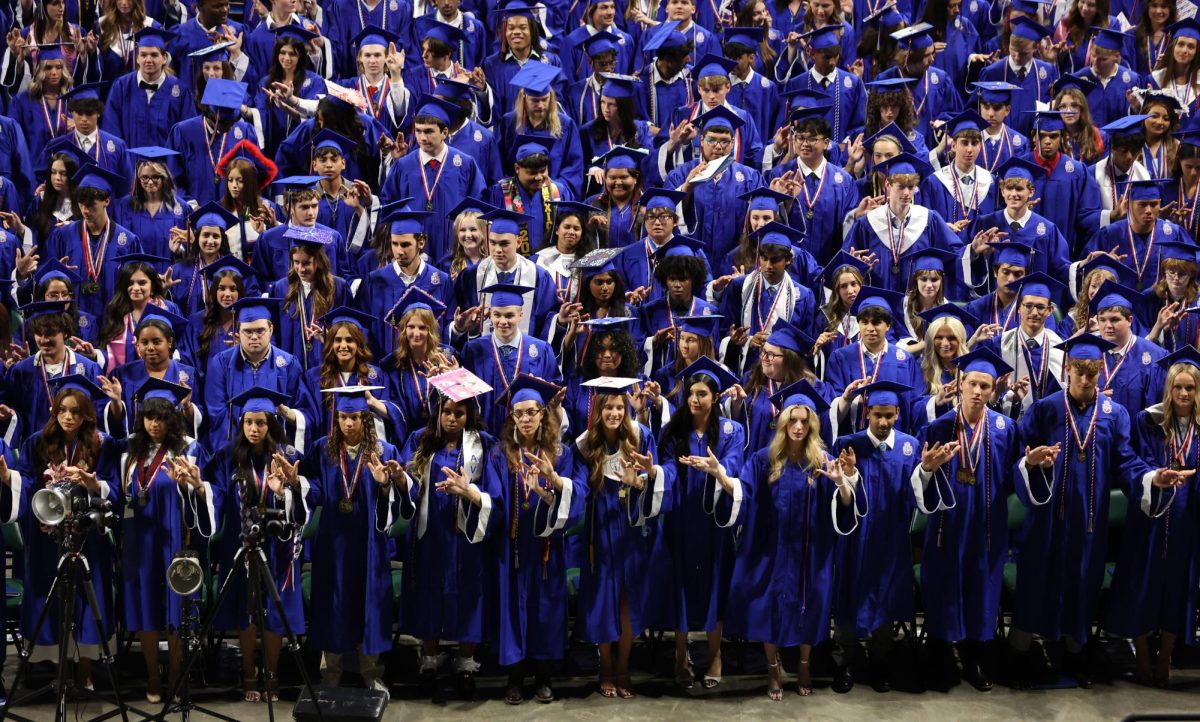
Facts about the graduating class became 17th class to participate in the Austin Community College Dual Credit Program with 116 seniors who earned three or more credit...
by Marilyn Rutschman, Austin Connelly, and Osiris Rodriguez Escobedo
May 28, 2026
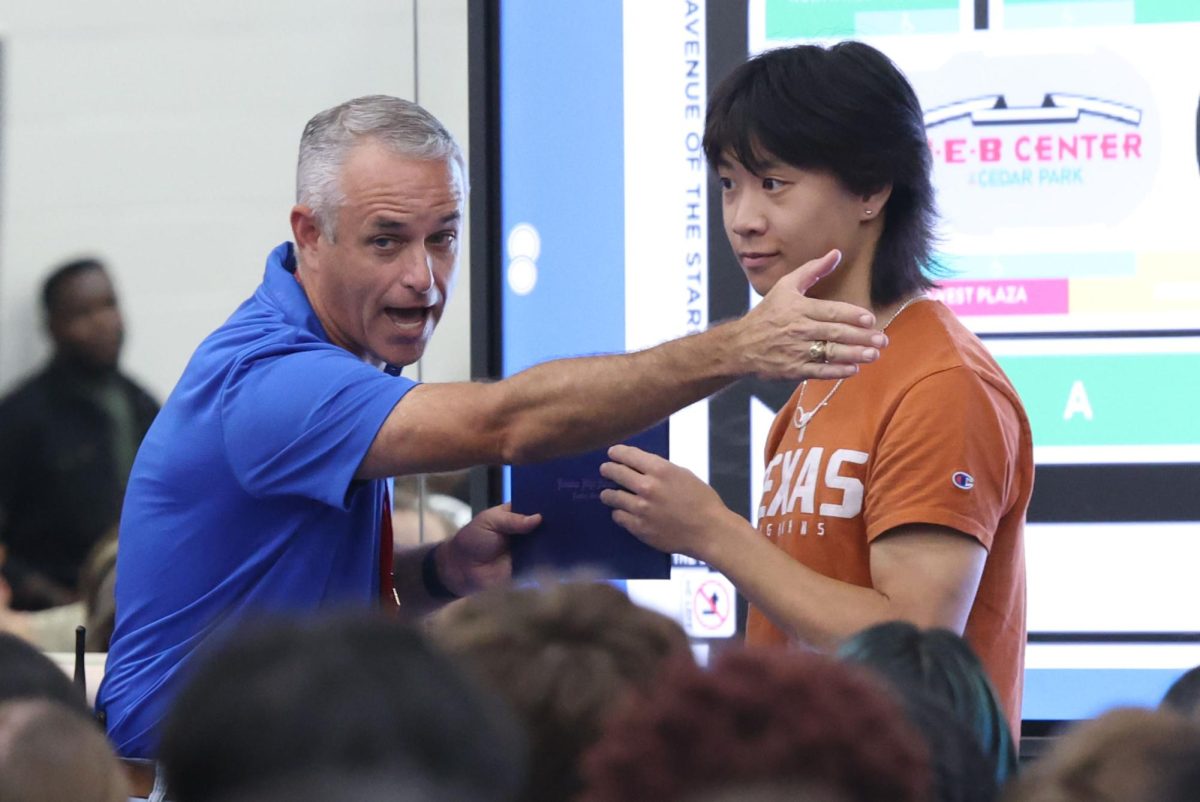
In a new, but hot, dance gym, more than 500 graduates practiced sitting in the correct chair, lining up in order, learning where to park and, well, flying paper airplanes. Seniors...
by Austin Connelly, Reporter
May 27, 2026
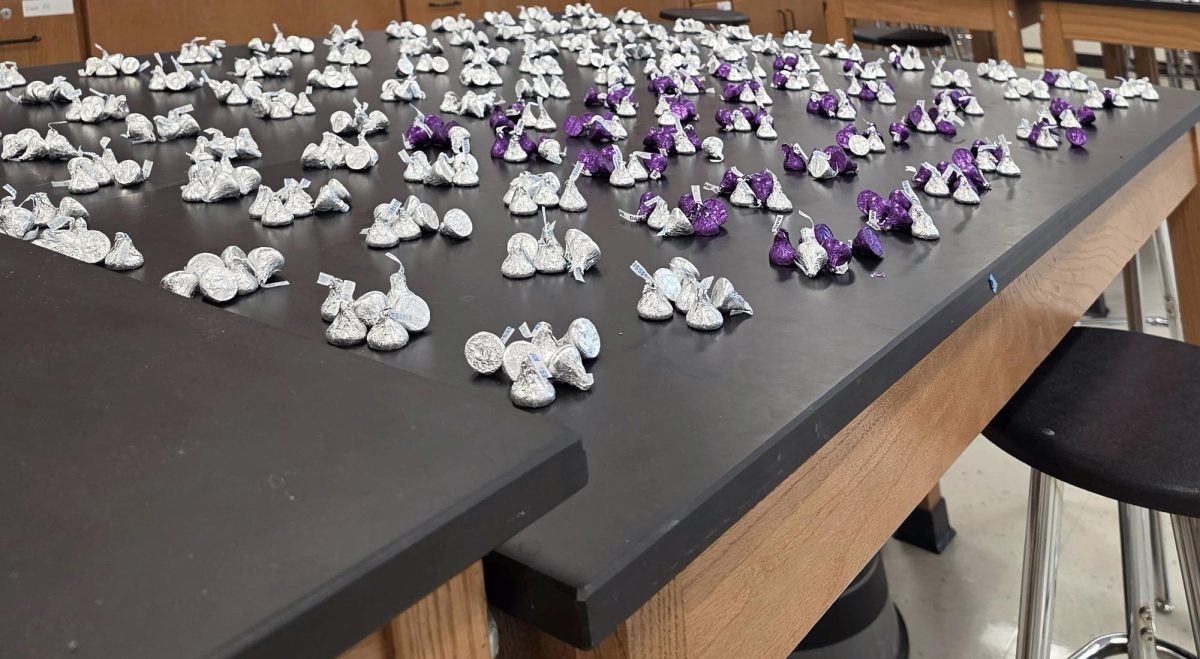
Health Occupations Students of America will deliver senior "Kisses" at graduation practice May 28. Teachers could purchase a goodbye note to send to their favorite seniors...
May 27, 2026
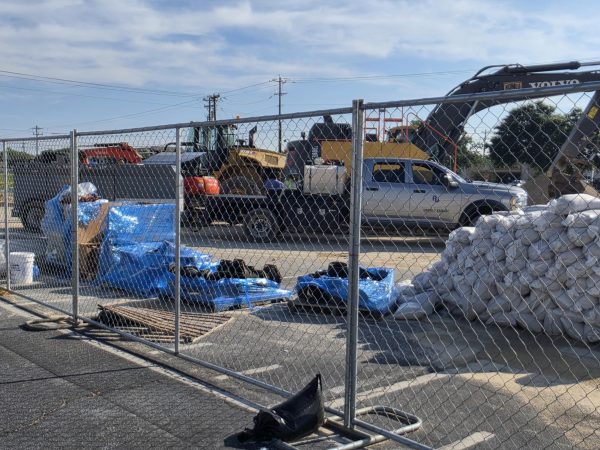
Blacktop construction impacts band
May 26, 2026