“I challenge you to a trivia battle.”
This six-word phrase echoed throughout the halls for nearly a week as the IB History of the Americas students turned lunches, passing periods, before and after school time into a World War II-themed trivia war. During this academic-charged history simulation, seniors and juniors stalked each other between classes, provisions changed hands after incorrect answers, and students waited outside of classroom doors like ambush predators.
Starting from March 2 to March 6, students were armed with colored provision cards, trivia questions, and green lanyards. Each student carried a bag of five provisions that represented various wartime resources: armour, food, medial, shelter, and weapon supplies. Each of these provisions had a different point value that ranged from five to 25 points. The green lanyards represented their “lives” in the game and were worth 50 points if stolen or captured during a trivia battle. Higher-ranking players carried highly valuable targets: eliminating a general was worth 100 points and defeating a team’s president was worth 200 points.
To start a battle, a student had to approach another student and say the official phrase: “I challenge you to a trivia battle.”
Once these words were spoken, the defender had to engage. The aggressor would ask a World War II trivia question from their prepared notecard (which contained two open-response questions and three multiple choice questions). These questions were based on assigned course topics such as the home front, the European front, or the Pacific theater. If the defender answered the question correctly, they would follow up with another question. If answered correctly, the battle would end in a draw.
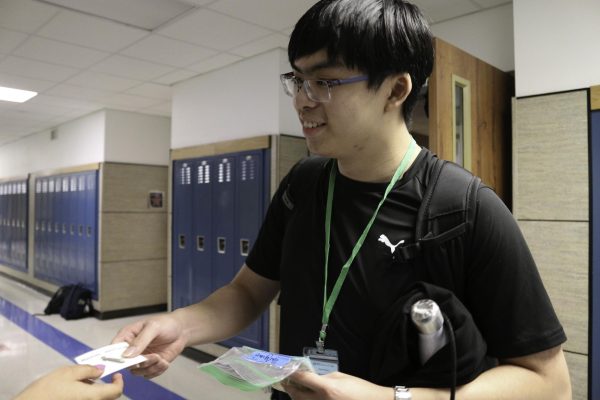
The only way to lose a provision was to get a question wrong. Once a player ran out of provisions, their lanyard would be the next thing they would have to surrender. Thus, also eliminated from the war.
Students battled across campus during the five-minute passing periods, lunch, and before or after school. The goal? Simple. Accumulate the most points for their team by defeating opponents in history based trivia duels and completing the most special engagements. But, of course there were limits. Classrooms were considered sanctuaries, meaning that students could not battle each other inside them.
IB History of the Americas I teacher Haley Allen designed the war last year for last year’s IB History seniors and AP U.S History students.
“I started to prepare a month in advance,” Allen said. “I spent time putting together the supplies, reaching out to spies, updating the instructions and materials. Mrs. Hauenstein was amazing, she really helped me with everything and highly contributed to making the war more structured and rigorous.”
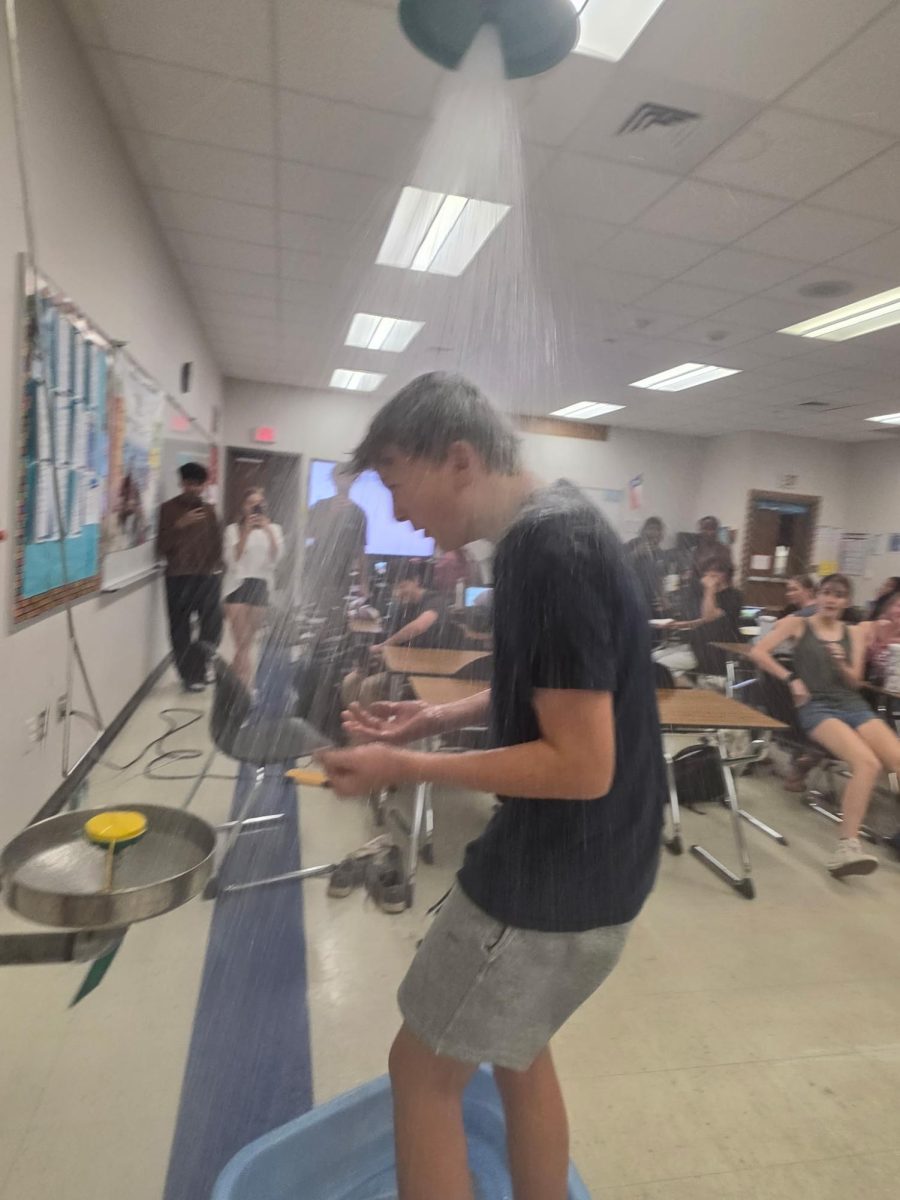
Between fifth and sixth period one day, the senior and junior IB History class spilled into the hallway at the same time.
“It was full on engagement,” Allen said. “Almost all students were challenging each other in the hallway. It was exciting to watch how engaged everyone was at one time.”
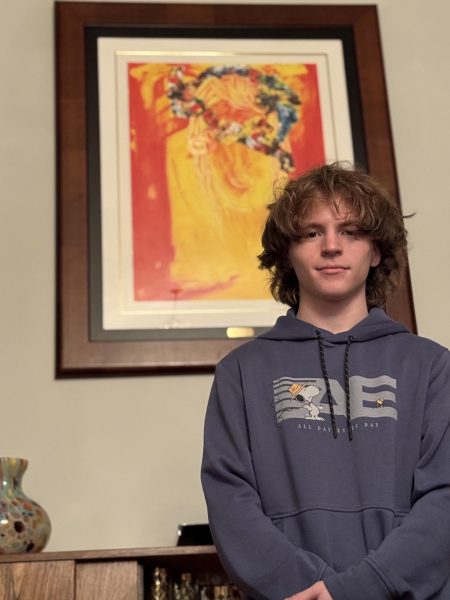
This was senior Anthony Tamtoro’s second year participating in the history game, so the structure and design of the game was not new to him, nor was the academic portion of it.
“All of the learning happened basically before the war, when we were studying and preparing for it,” Tamtoro said. “I think we [my team] had a little bit of an advantage, because we already learned the material last year and this year. Some questions were also similar to the ones we used last year.”
Beyond trivia battles, teams could also earn points through “special engagements.” These were creative activities tied to World War II history. Students could dress up as historical figures, perform speeches; poems; or raps, recreate political cartoons, or even create helpful short videos that explained historical topics. Senior Elizabeth Chaison used these activities to her team’s advantage.
“Friday morning, when everything was just about to end, I just point dumped with the extra engagements,” Chaison said. “I brought a large bag of clothing and we just kind of put together costumes for each other. We did make Franklin D. Roosevelt sit in a chair with a handicapped placard, which felt diabolical.”
While this was the second year of participating in the game for seniors, this was the first year for juniors. Junior Arnav Malhotra, however, appreciated how a normal class lesson was able to turn into something far more interactive.
“In most history classes you learn through lectures and notebooks,” Malhotra said. “But this actually allowed us to immerse ourselves and actually look at the stuff taught in every class in a different perspective and in a different light.”
The constant possibility of being challenged adds an element of pressure that is unique to exam stress or traditional studying.
“Don’t get me wrong, we didn’t experience the hardship of war,” Malhotra said. “But we kind of experienced the tension of always being worried of someone walking around the corner and battling you.”
Junior Geetika Joshi and her class quickly realized that the seniors would be formidable opponents because of their prior experience and knowledge. But that did not deter them.
“The entire time, my class, including me, was super motivated,” Joshi said. “We felt a lot of tension going up against the seniors, and we realized early on that we would need our best effort to win.”
Along with the battles themselves, the war had a formal system included for reporting students that violated the rules, known as “war crimes”. Students could submit accusations using a form if someone broke a rule. For example by running away from a battle, not carrying provision cards, or not wearing a lanyard would be cause for accusations. But, the reports quickly took on a life of their own.
Allen said students often had dramatic and humorous accusations against each other throughout the week. Allegation examples included: “attempted gum-based bribery,” “psychological warfare via laughter” and even “recruitment of private security.” One student even wrote a two-word plea: “help me.”
“My favorite war crimes were some of the students pacing outside of IB classrooms waiting for dismissal,” Allen said. “It was intimidating for the students inside because they had to strategize how to get to their next classroom without being bombarded.”
For many other students, the most memorable part of the war was simply the chaos of the challenge themselves.
“It was funny seeing people run,” Tamtoro said. “That was fun. I enjoyed sparking fear in the hearts of juniors.”
Not every tactic was honorable, however. Tamtoro admitted he sometimes tried to take advantage of timing.
“I kind of wanted to hit the juniors harder on their SAT day, which is a bit cruel,” he said. “But, I felt like they would be a bit more tired mentally.”
Despite the chaos of the war, the simulation resulted in turning history into something that students could simply read about. Instead, it became something that they debated, strategized, and could laugh and learn from together.