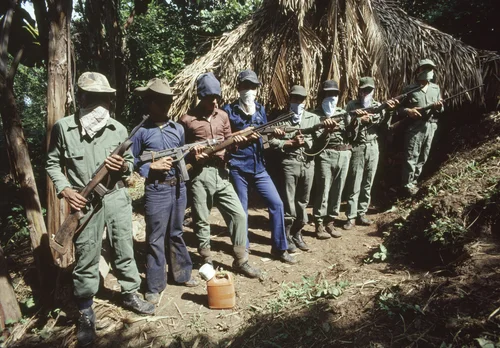
During the 1980s, in the middle of the Guatemalan Civil War, a young Mayan man was interviewed about the conflict that had taken over his country. The interviewer asked him a simple question: Which side did he support more, the rebels or the government forces? The man answered honestly. “Neither the rebels nor the federals,” he said. “If a soldier saw us, he would kill us. If a rebel saw us, he would kill us as well.”
The man’s answer reflected the reality that many civilians faced during the war. For people living in villages and small towns, the conflict was not about choosing sides. It was about surviving. That reality is something my grandpa lived through.
My grandpa, Ventura Castro, was born in July 1967 in Guatemala. He is Mayan and grew up speaking the Mayan dialect along with Spanish. When he talks about his childhood, he often describes it as peaceful and simple. Life in his village was centered around family, community and traditions. People knew each other well and daily life moved at a slower pace. But by the early 1980s, everything had begun to change. When my grandpa was young, he found himself living in the middle of the Civil War. The conflict between government forces and rebel groups had spread across the country and many rural areas were caught directly in the violence.
Over time, my grandpa began telling me about some of the things he witnessed during the war. Many of those memories were difficult to hear. They were stories of violence and destruction carried out by both rebels and the army. One of the things that always stays with me is remembering how young he was at the time. He was only sixteen years old. When I think about that, I imagine someone my own age seeing the kinds of things he saw and carrying those memories for the rest of his life.
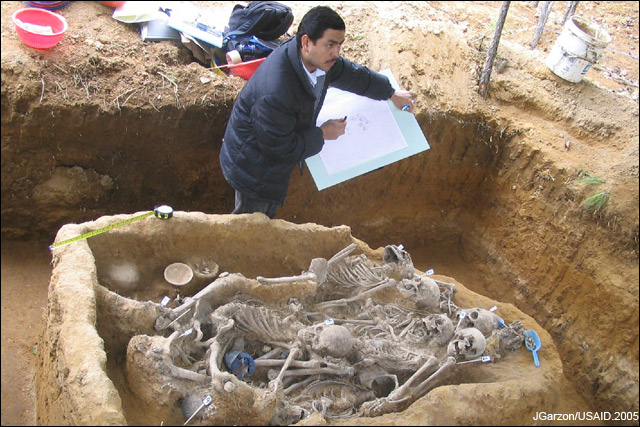
One story he told me not long ago described how normal death had become in his village during the war. According to him, there were times when the streets were filled with bodies. “They killed men, dogs, children and women,” he said. In villages, towns and sometimes entire communities, bodies would lie along the roads. At first, hearing that shocked me, but what surprised me even more was how people eventually reacted to it.
My grandpa told me that, after a while, people became used to seeing it. “I wasn’t even scared,” he said. “We just kept moving on with our day.” For the people living there, it became almost like seeing roadkill on the side of the road. They would notice it, move around it and continue walking. Sometimes someone would move the bodies off to the side of the road so others could pass. It wasn’t because they were cruel or didn’t care. It was because the war had made those sights part of everyday life. When violence becomes that common, people learn to survive by continuing forward.
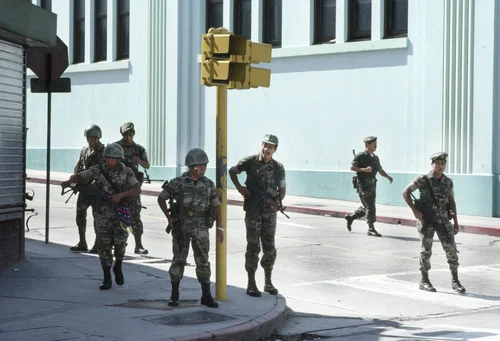
Another account my grandpa told me was about how soldiers, both rebel and government troops, sometimes tried to hide their identities.
According to him, many soldiers would stop shaving and allow their beards to grow long so they would look like poor travelers or homeless men. They would then walk into small stores or gas stations and tell the women working behind the counter that they were poor and needed help. Once they were inside, they would take whatever food or drinks they wanted. Often, they carried rifles slung behind their backs, making it clear they had the power to take what they wanted. For the villagers, especially the Mayan communities, there was little they could do. They were often caught between armed groups with no real way to resist.
My grandpa strangely remembered those moments. When he told me this story, he even laughed a little while describing it. At first, that seemed strange to me, but I eventually understood. Sometimes people laugh about difficult memories because it is easier than showing the pain behind them. When my grandpa talks about the end of the war, he describes it in a surprisingly simple way. According to him, the Guatemalan government never really gave a clear explanation or apology to the people who lived through it.
“It just happened,” he told me. “Once the war was over, everyone just went back to their normal lives.”
But when I look at my grandpa, I can’t help but feel the war left deeper marks than he lets on. He often says it wasn’t a big deal, but I know that memories like those do not disappear easily. Trauma, loss and guilt can stay with someone for years, even if they don’t talk about it openly. Sometimes the strongest people are the ones who simply carry those memories quietly. I respect that about him. If there are things he does not want to explain, I understand.
Still, when people tell me to “forget it,” or say that “It happened in the past,” I cannot agree with them.
The Mayan people suffered greatly during the civil war. Many were brutalized, killed, tortured, abused, or taken advantage of during those years. Even though I am not Mayan myself, I believe those stories should not be forgotten.
And I will never forget them.
I will remember them for my grandpa.
Not long ago, I was at home with my grandpa while he was eating. In a moment of playfulness, I grabbed my JROTC hat and placed it on his head. I immediately realized it was a mistake. He stopped eating, reached up and pulled the hat off his head. “No, no, no, no,” he mumbled. “I don’t like that. Get that off of me.”
I felt a sudden, heavy wave of guilt. In my world, that hat represents my school and my future. But in his, it represents the men who stood over the bodies in the road. It represents the “federals” who took what they wanted and left only fear behind.
That small moment taught me more than any history book ever could. My grandpa may say the war “just happened,” but his reaction told the real truth. The wounds may have closed, but the scars are still tender. I will never fully understand what he went through, but I will always respect the silence he carries.